A finished car has several different lives. In the source file, you can edit its shape and materials. In the exported file, the engine has to understand it. In a race, it has to move correctly, show its weapons, and hold up through repairs. Blender has an important place at the start of this chain, but the work doesn’t end with an export button.
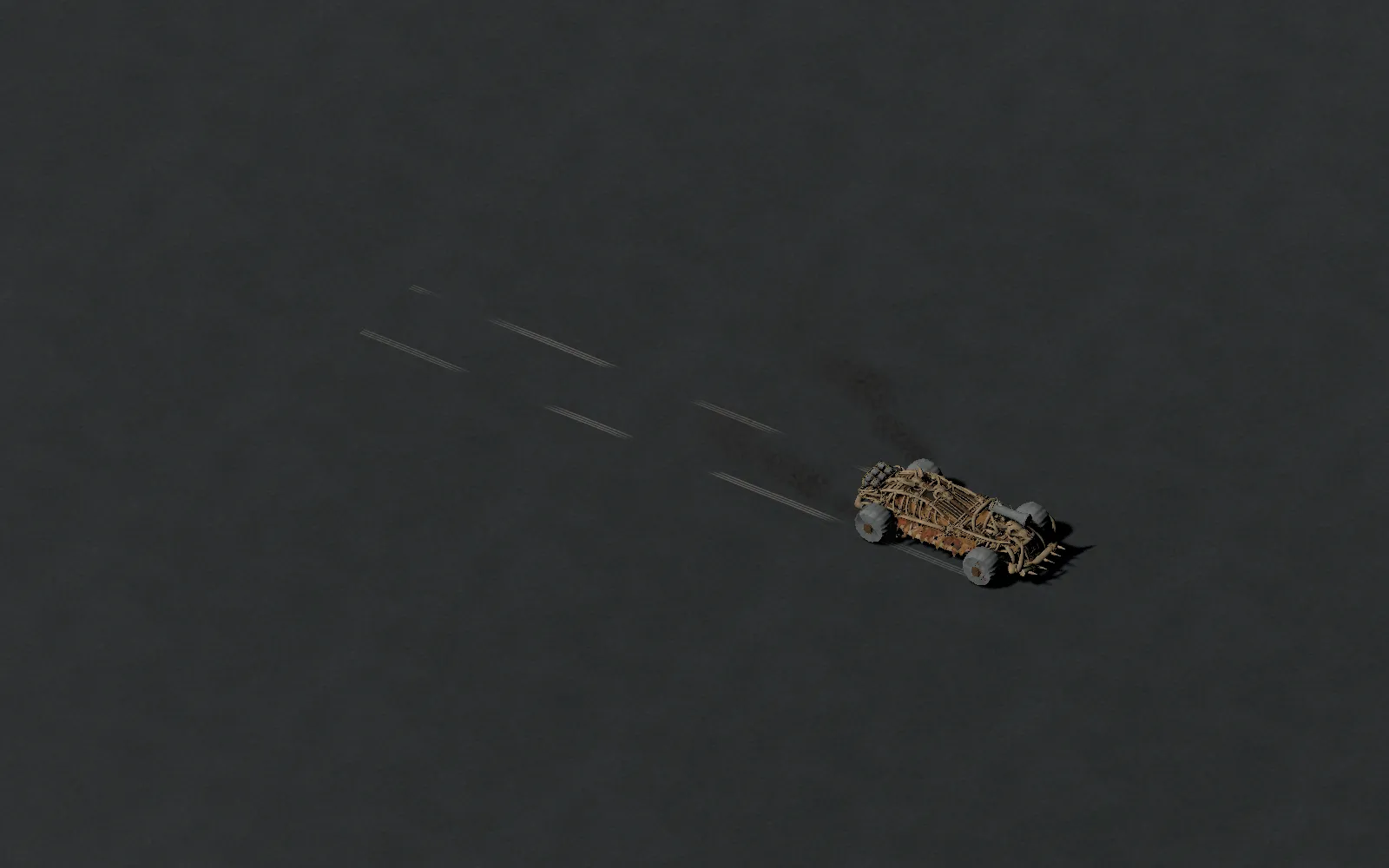
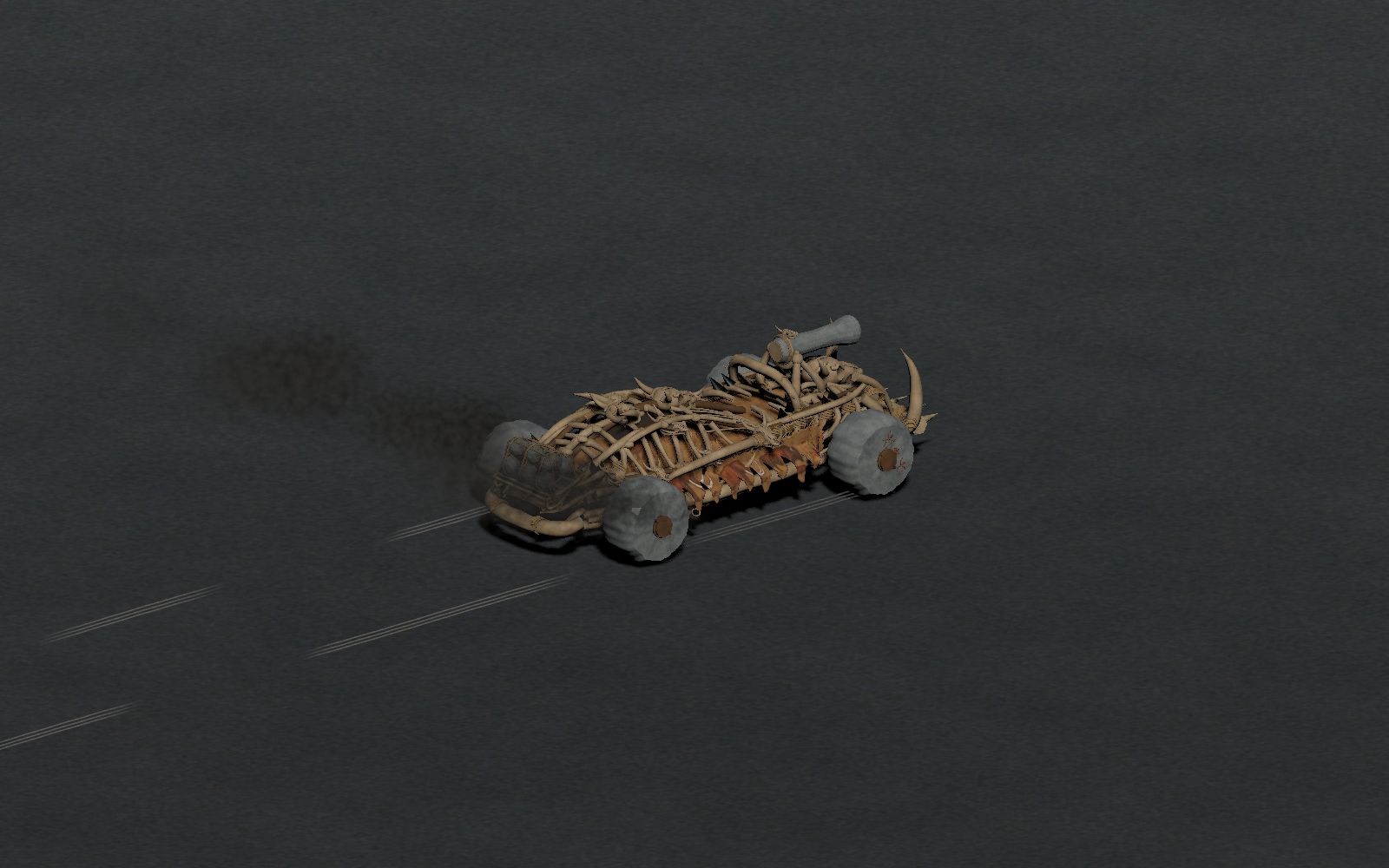
The bone car in Smoke and Flame makes the connections between these stages easy to see. The source model, surface work, and game assets are saved separately. When a targeted revision is needed, we can return to the relevant stage without losing the result of the previous one.
Start with the structure
Shape determines the silhouette, the size of each part, and where parts connect. Wheels need their own axles, weapons need mounts, and the body needs consistent proportions. If that doesn’t work, a material will only make the mistake more detailed.
In the latest revision of the bone car, the body and wheel track became wider, and the stone wheels became bulkier. The changes kept the existing construction. Previous files remained as separate versions, so we can compare the result with what we had before the feedback.
The surface responds to light
When the bones looked too plastic, we changed their color, roughness, and fine surface pattern. That’s a separate task from modeling. Painting requires a layout that fits the parts; recoloring requires each instance to be independent; exporting needs to preserve all those relationships.
Blender has a Python API that lets us automate repeatable actions. Our production uses scripts to prepare and export assets, but their output still gets checked. A script error can quickly repeat across the whole set, so speed only helps when paired with oversight. Blender Python API documentation.
Export is a transition, not the finish
In Godot, we need to view the model in real lighting, at the right distance, and in motion. For the bone car, we checked weapon combinations, materials across several instances, wheel axles, and whether parts returned after repairs. A beautiful close-up can’t answer all those questions at once.
Blender is an open tool, and images and models created with it don’t automatically become GPL-licensed just because of Blender’s license. We check the rights to source materials separately. Blender license explanation.
For us, the value of this process is being able to trace a part’s journey: where its shape came from, what changed after feedback, which file made it into the game, and how it works there. Then the car on the track remains an extension of the artist’s work, not an unexpected interpretation by the exporter.