First, we make games we want to play ourselves. Sometimes that means wanting to pull out a phone while waiting in line. Sometimes it means settling in for an economic strategy game in the evening. And sometimes we want to get friends together, line up at the starting line, and find out which of us has been talking a little too confidently about our driving skills.
Guzzle Boom!, Last Road, and Smoke and Flame grew out of those different moods. They don’t all move at the same pace. But each has a personal reason to exist: it starts with a kind of play we ourselves want to come back to.
A small game with a galactic appetite
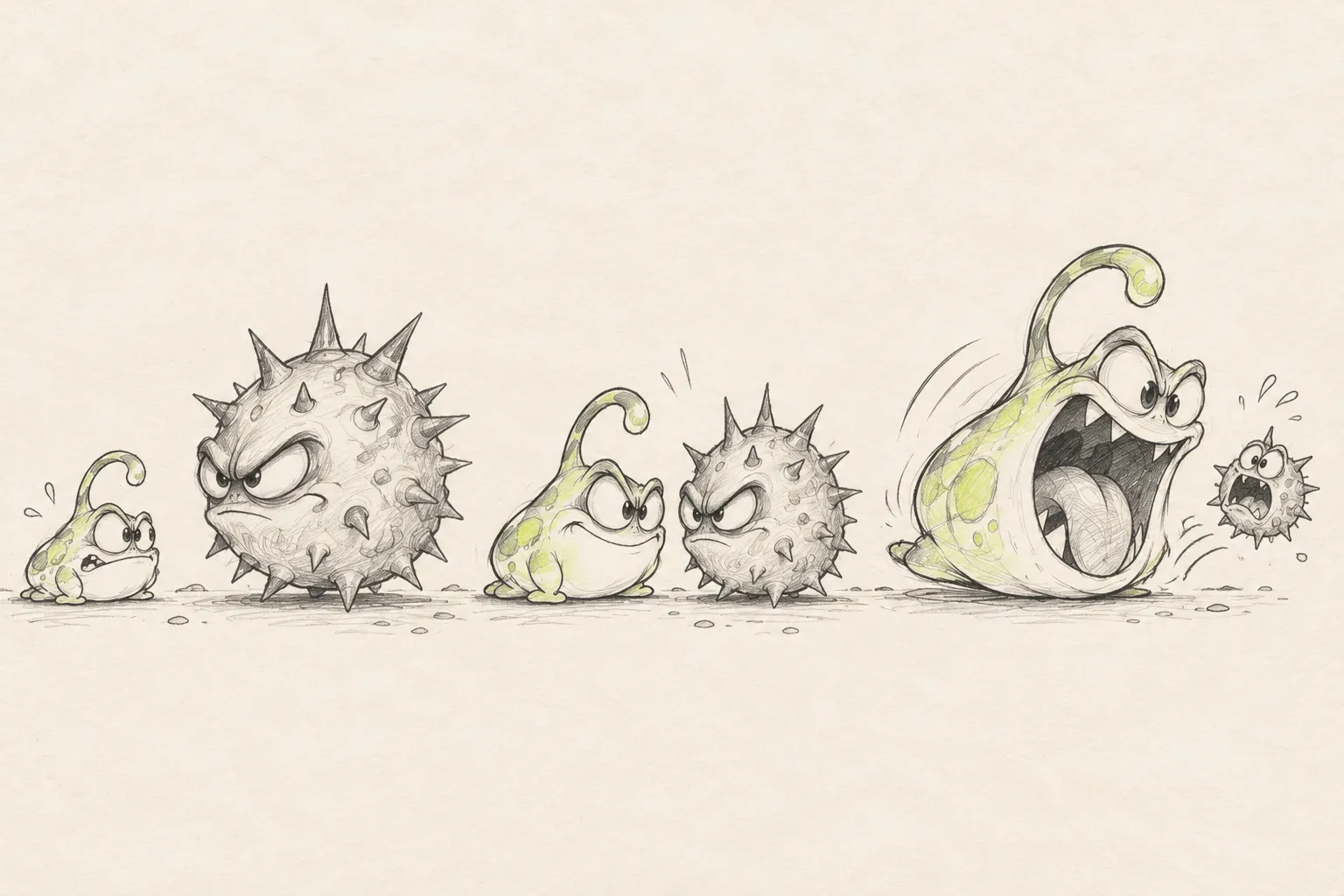
Guzzle was first. The plan seemed almost safe: a small mobile arcade game inspired by Angry Birds, Flappy Bird, and Burrito Bison. A slime flies, eats, and evolves. Then somehow, the modest premise made room for a journey from the microworld to devouring galaxies.
Testing speeds and screen formats quickly brought our attention back to the few feet of flight right in front of us. Too fast, and you couldn’t make anything out. Too slow, and it was boring. New mechanics, wildlife, and phase-based bosses made the game deeper, but also took it further from its original simplicity.
Our friends’ reactions were mixed: some got absorbed in it, some were bored, and some didn’t understand the skills and interface. We asked for honest criticism and got a reason to reconsider our direction. Guzzle is now moving toward a deeper microworld. The galaxies can mind their own business for now.
Trading after work
Last Road came from wanting a good economic strategy game. Trade Empires, Corsairs, Sid Meier’s Pirates!, and Anno came together in our memory: trade, growth, travel, and a story of your own. Spice and Wolf helped us picture the world’s mood and visual presentation.
That led to the caravan, the trading house, a living market, and the question of making it back. The rules and prototype have come a long way, but the graphics made us pause. We tried characters, interfaces, and different visual approaches, but they didn’t give us the feeling we wanted. Finding the game’s look is now a major part of the work.
Even a meditative game can have a restless development process. We hope that one day the restlessness will stay on our side of the screen, while the player spends the evening happily deciding where the next shipment will bring the best return.
Races worth sharing
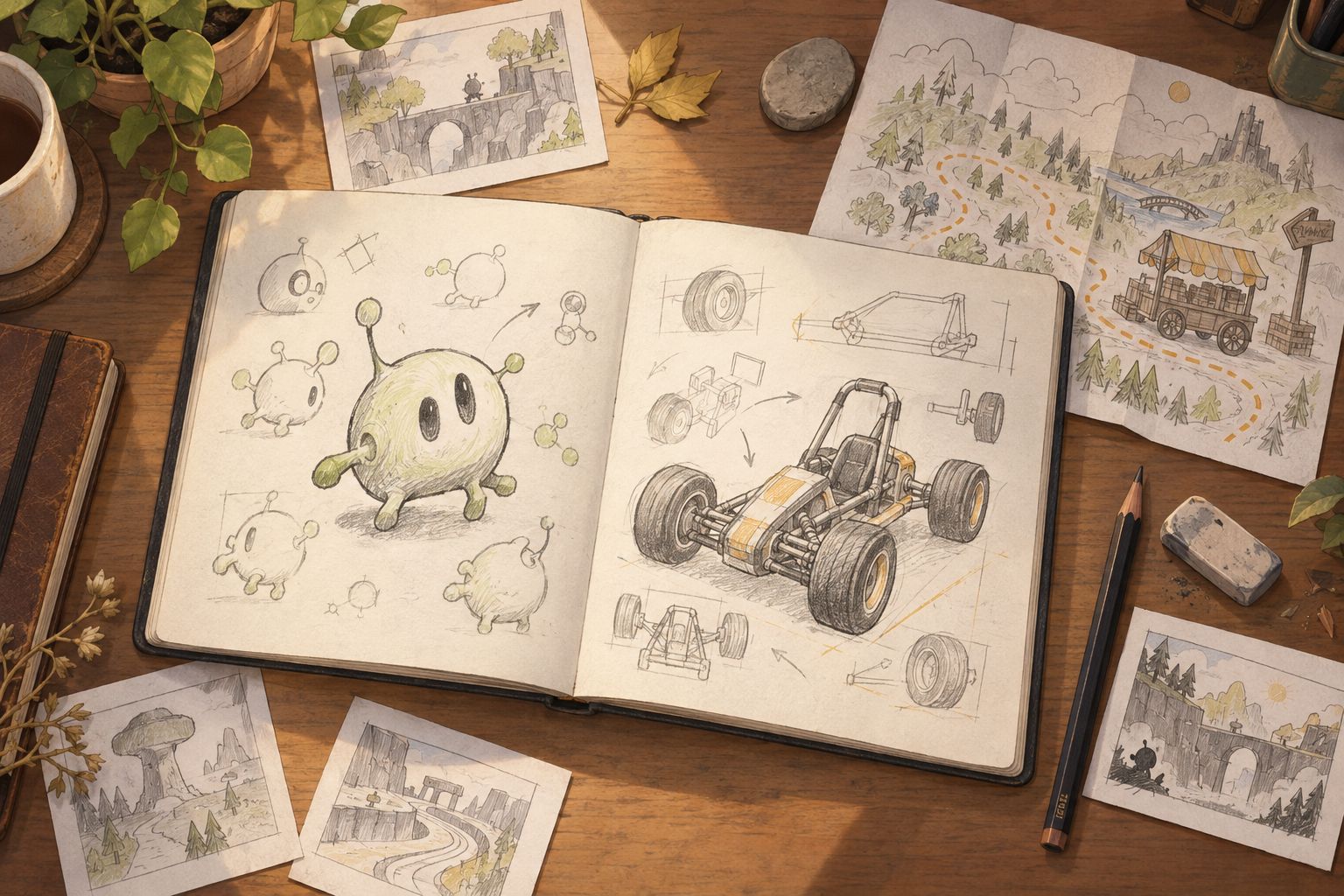
Smoke and Flame began with a desire to have fun racing with friends. But recreating a familiar kart racer seemed less interesting than finding our own mix. Mad Max, Carmageddon, Rock n’ Roll Racing, and League of Legends each contributed a different part of the recipe to come: cars, combat, a top-down camera, vivid characters, and combinations of abilities.
That led to the desire for a deep, replayable racing game: play solo, play through it with friends, then compete online with your own combinations. That’s a direction, not a list of finished modes. The prototype grows through specific things: controls, preparation, models, the track, and tests in motion.
This is especially exciting to work on right now. Sometimes one look at the next strange car makes us want to open the project again. Then we discover that a beautiful car still needs its wheels to come back correctly after repairs. And the workshop goes on.
Why show all this?
On the blog, we want to preserve not only the beautiful results, but also the moments when our direction changed. A skill that wasn’t clear, boring speed, an unsuccessful interface, bones that looked too plastic—each has a story that continues. Those stories show how the desire to play turns into actual work.
The first series are retrospectives. We’re publishing them now and telling the past through documents and our own memories. We label new pencil sheets as illustrations and real screenshots as development frames. From here, the workshop will move along with the games: sometimes confidently, sometimes through another revision, sometimes with a car that urgently needs even bulkier stone wheels.