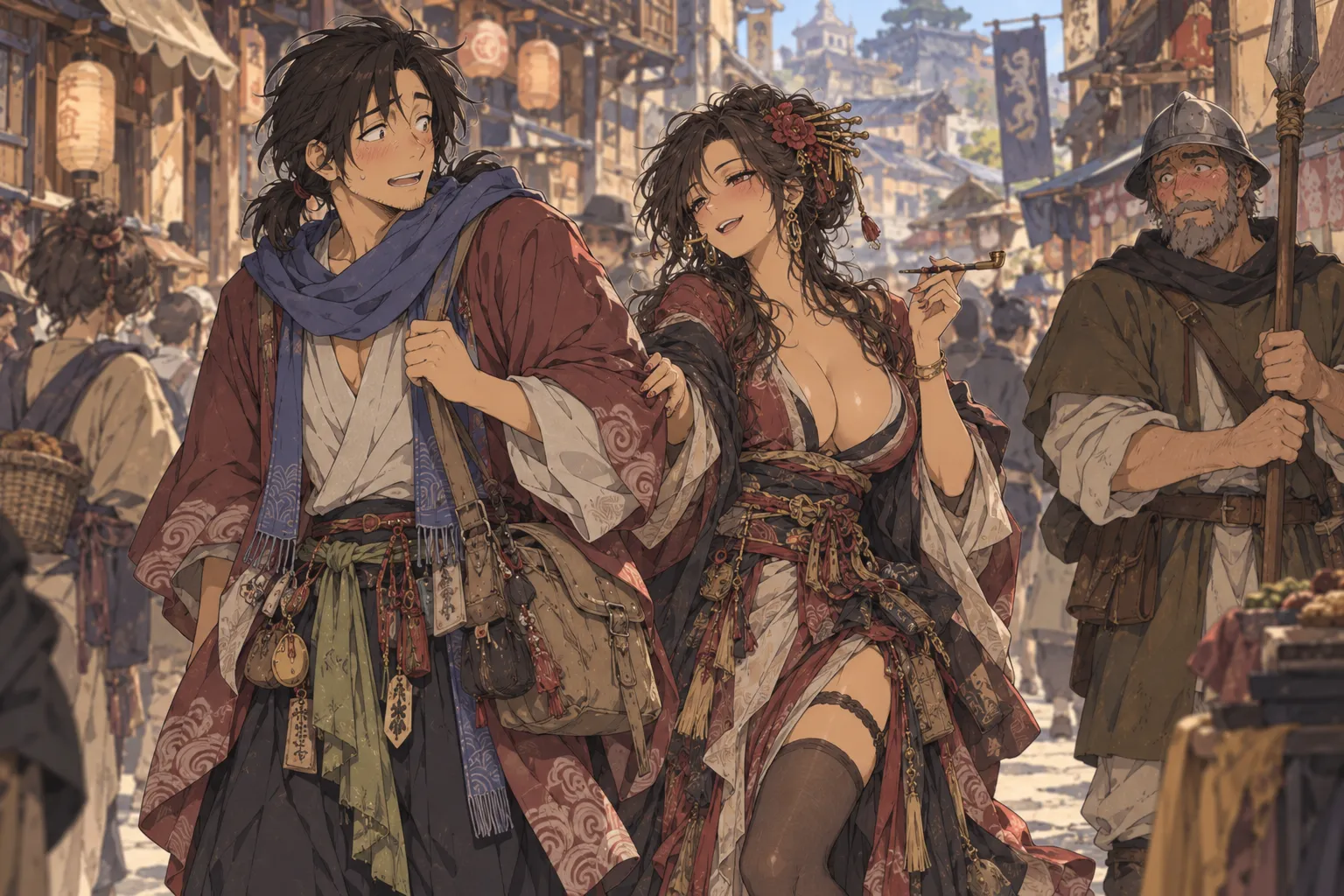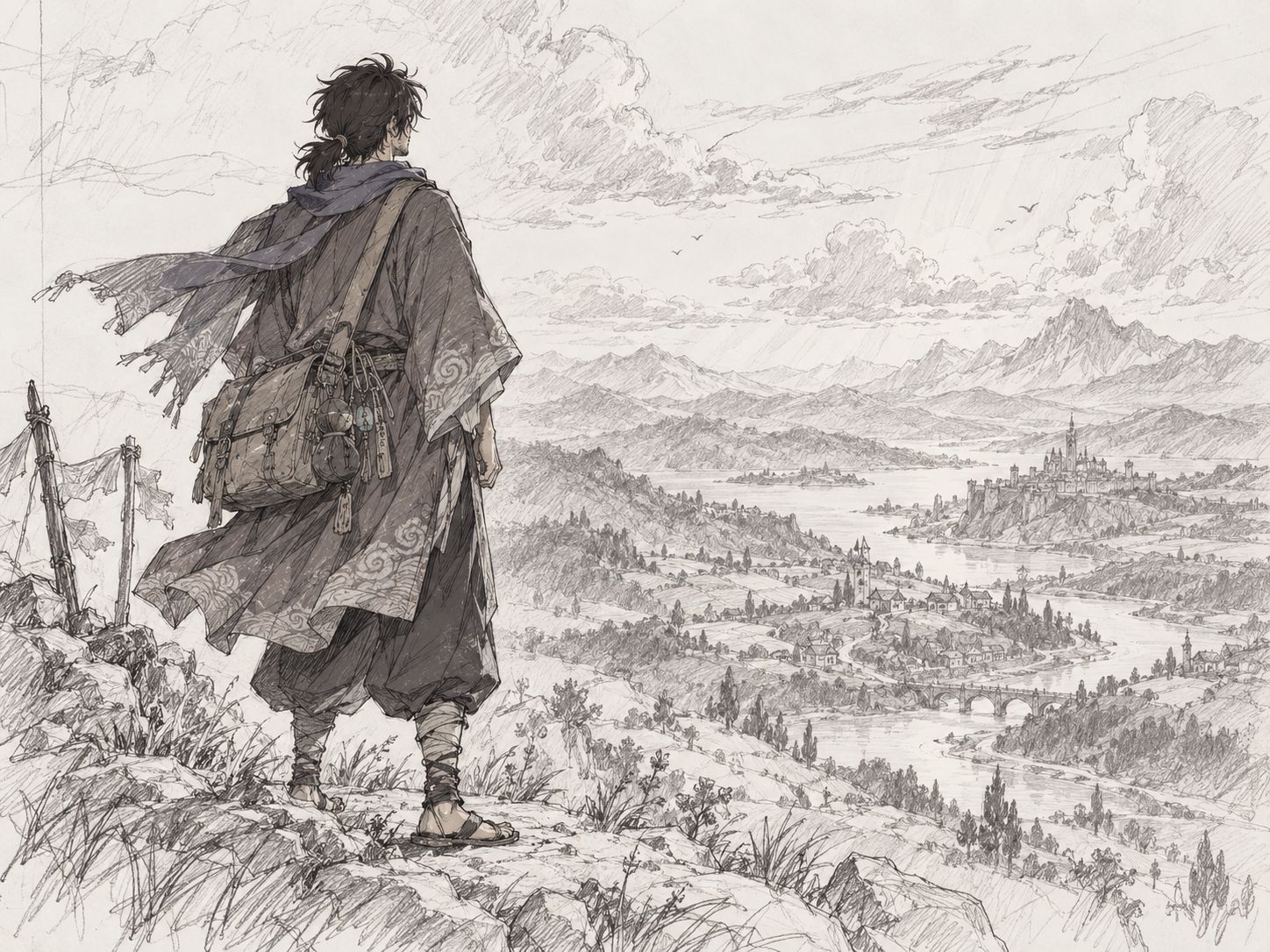
You can explain the economy in a table, but a table can’t show where the caravan is returning to. For Last Road, we’re looking for a presentation where the trading house, streets, and people belong to one world. In October, the art direction settled on a detailed top-down isometric view with pixel art and hand-drawn characters.
We reached this point through many unsuccessful attempts. The characters and interface changed, as did the art itself. The sketches didn’t impress us, and some were hard to look at for long. That was especially frustrating because the atmosphere we wanted had been there from the start: after remembering Spice and Wolf, I wanted a warm, lively trading world that would be interesting to spend time in after work.
Meanwhile, the game’s foundations kept developing. There was a strange distance between what we could already explain through the rules and what we wanted to see on screen. The market had reasons for changing its prices. We still hadn’t found an artistic direction that felt convincing to us.
That choice sets the camera, scale, and density of detail. It doesn’t mean the whole city has already been built in a working game. The chosen direction, an individual experiment, and an implemented environment are different stages; one attractive image shouldn’t blur them together.
The camera determines the details
From above, rooftops, paths, building placement, and people’s relationship to their surroundings matter. A detail that reads well in a large portrait may disappear at gameplay scale. That’s why camera and character-size references need to accompany images of buildings.
We want the courtyard to read as a place where things happen. You’ll prepare, review results, and look for the option you need. Decorative detail shouldn’t obscure that structure. The more small details the environment has, the more carefully we need to choose its visual landmarks.
What the walking test told us
The art work included a separate test of character movement. It helped us check whether animation could work in the chosen style. But the test didn’t create a promise that you’ll be able to walk freely around the city: we clarified that this isn’t a goal.
It’s a useful example of an experiment ending in knowledge rather than a new button in the game. We learned more about the art and movement, kept the result, and returned to the trading post environment. Decorative life in the city and a controllable walk are different tasks.
Concept art beside the prototype
The site has approved artwork of the world. It helps convey the atmosphere, but it isn’t a snapshot of the current game interface. Each image in this series will have an appropriate caption.
Some prototype assets are still temporary, and the art is progressing in separate stages. For now, it’s more useful to show the direction and the real limits of the work than to declare a final look based on one sheet. The road home should lead recognizably to the trading house you’re building up. The roofs, courtyard, and people will gradually take shape around the gameplay question that’s already there: have you earned enough to finally turn back?