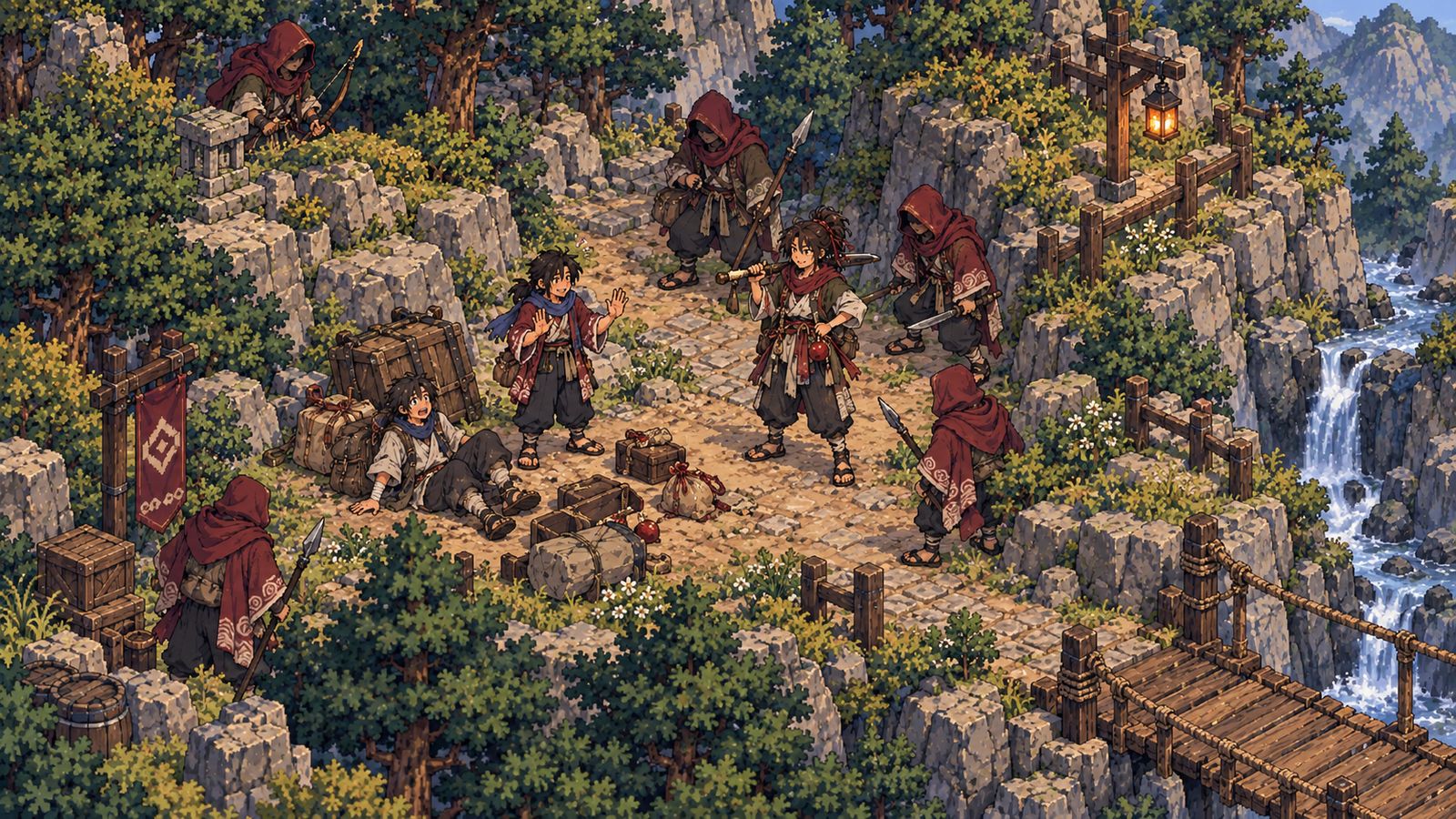
When bandits appear on the road, you’ve already made many of the decisions that matter: what cargo to carry, how many guards to hire, how much money to save, and which route to take. In Last Road, combat reveals the consequences of that preparation. During an encounter, you don’t reposition groups or activate abilities.
Automatic combat is established in the project as part of the trading expedition. Its job is to connect the risks of the road to the state of your caravan. That keeps your attention on transport: danger matters before the encounter and continues to matter after it.
Randomness with an explanation
The battle calculation includes the situation, but it shouldn’t erase the meaning of the balance of strength. You can see an estimate of the threat and possible consequences in advance. After an encounter, the result is explained through each side’s condition, losses, and what remains in the caravan.
That makes a defeat possible to examine. Where did the risk come from: weakened guards, valuable cargo, or the shortcut you chose? This doesn’t guarantee a pleasant outcome, but it lets you connect it to earlier decisions. A setback with a visible cause gives you something to learn from on the next expedition.
A robbery isn’t always the end
The project distinguishes retreat with a robbery from a complete capture. After a partial loss, the caravan may continue, but with different options. You need to reconsider your purchases, expenses, and return trip. A complete capture ends the expedition.
Goods are stolen as whole trade lots. So a small lot of valuable goods can disappear entirely even in an outcome that doesn’t count as a complete capture. “Partial” describes what happens to the expedition; it doesn’t promise that some of every stack will be saved. The interface needs to show the losses that can actually happen, rather than soothing you with an abstract percentage.
The caravan stays at the center
Adding a separate tactical game to every encounter would change the whole rhythm. Right now, preparation, the market, and the road form one chain. A short battle brings you back to the question of what to do with the caravan you have afterward.
This chapter explains the design we’ve chosen; it doesn’t tell a story about a manual battle mode supposedly being cut. We have no confirmed history of such a redesign. What interests us is the boundary of the player’s responsibility. You don’t command every strike, but you choose the conditions under which those strikes happen. After an encounter, you’re back to making trade decisions—sometimes with a very strong urge to see the trading post gates.