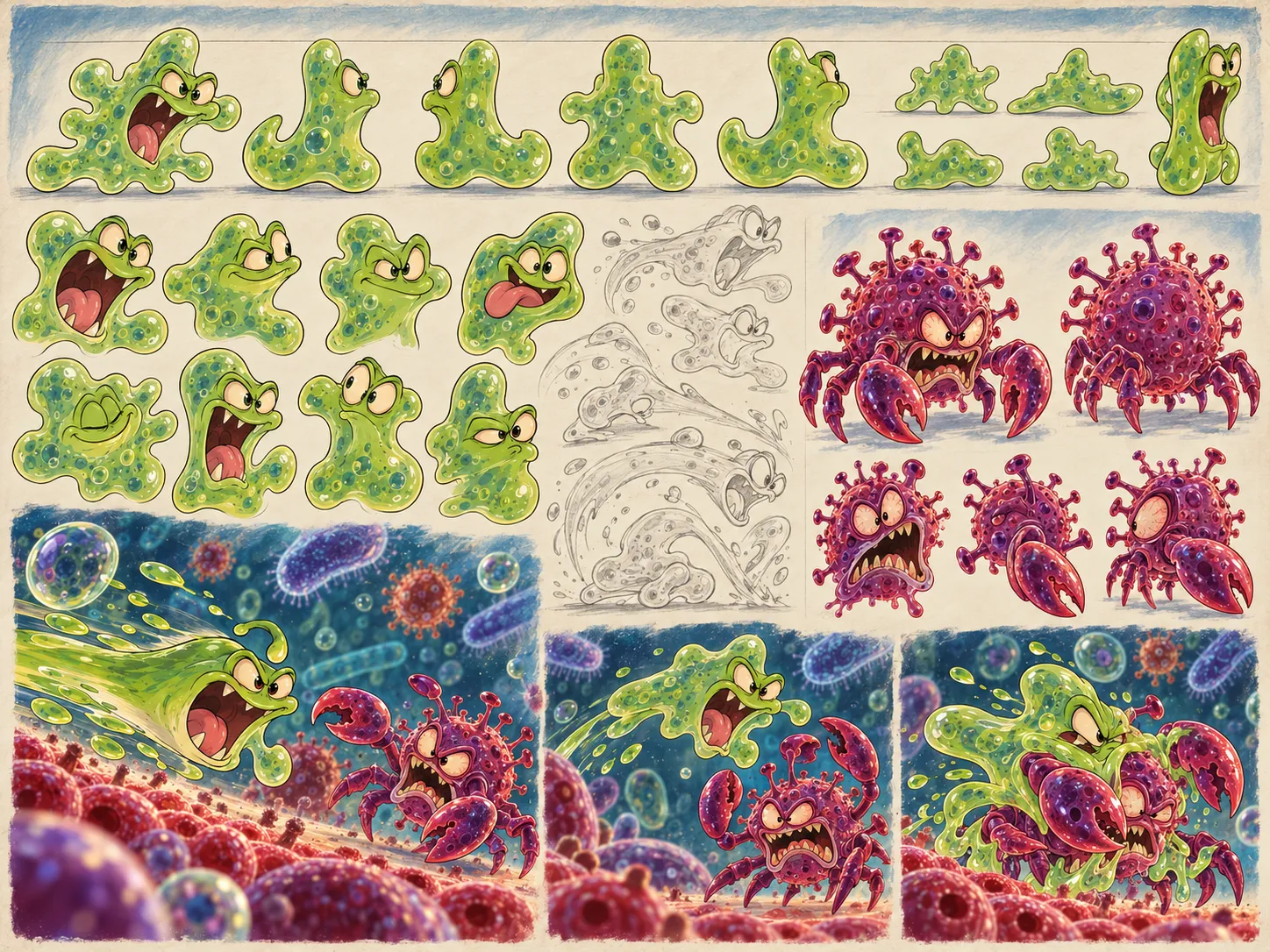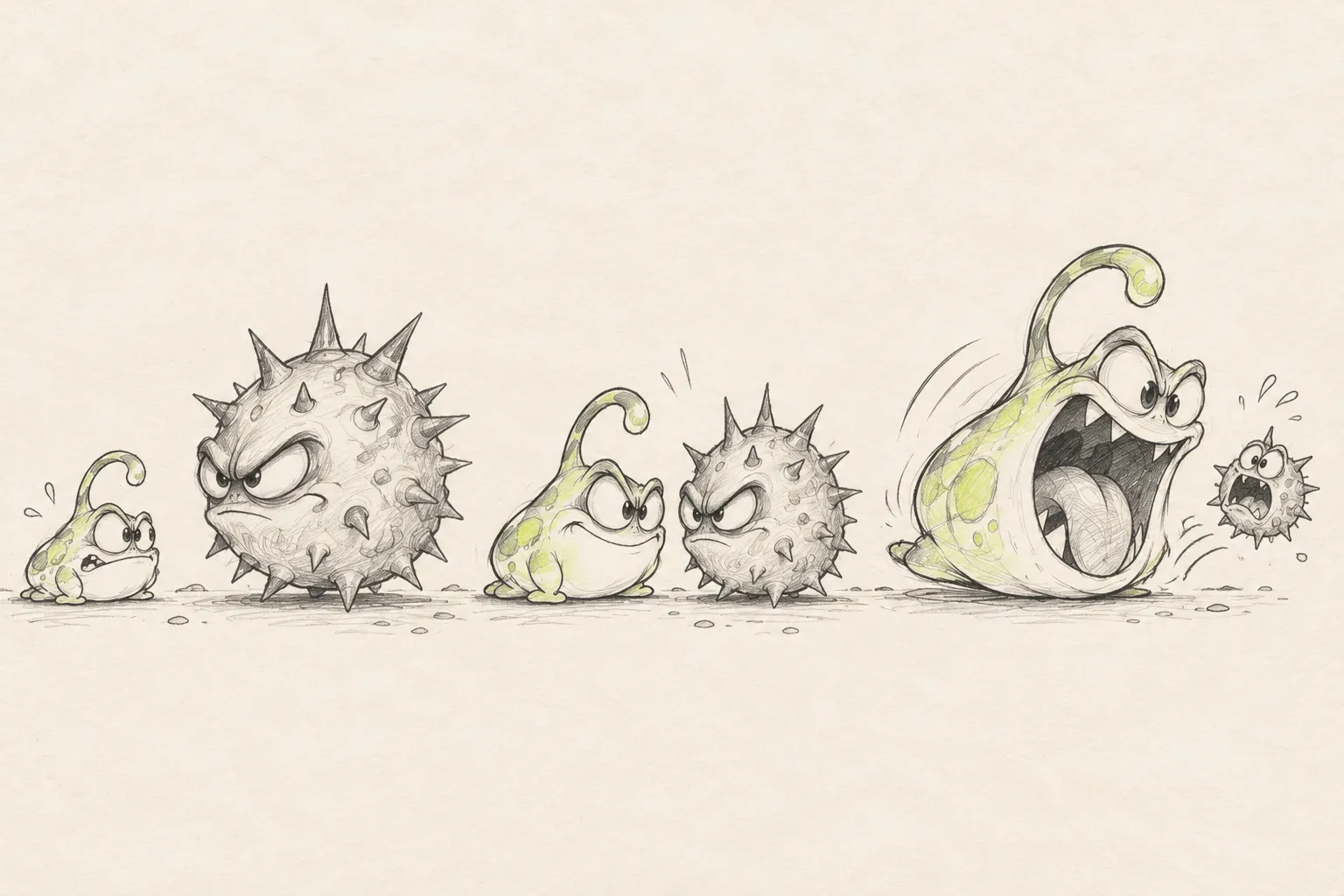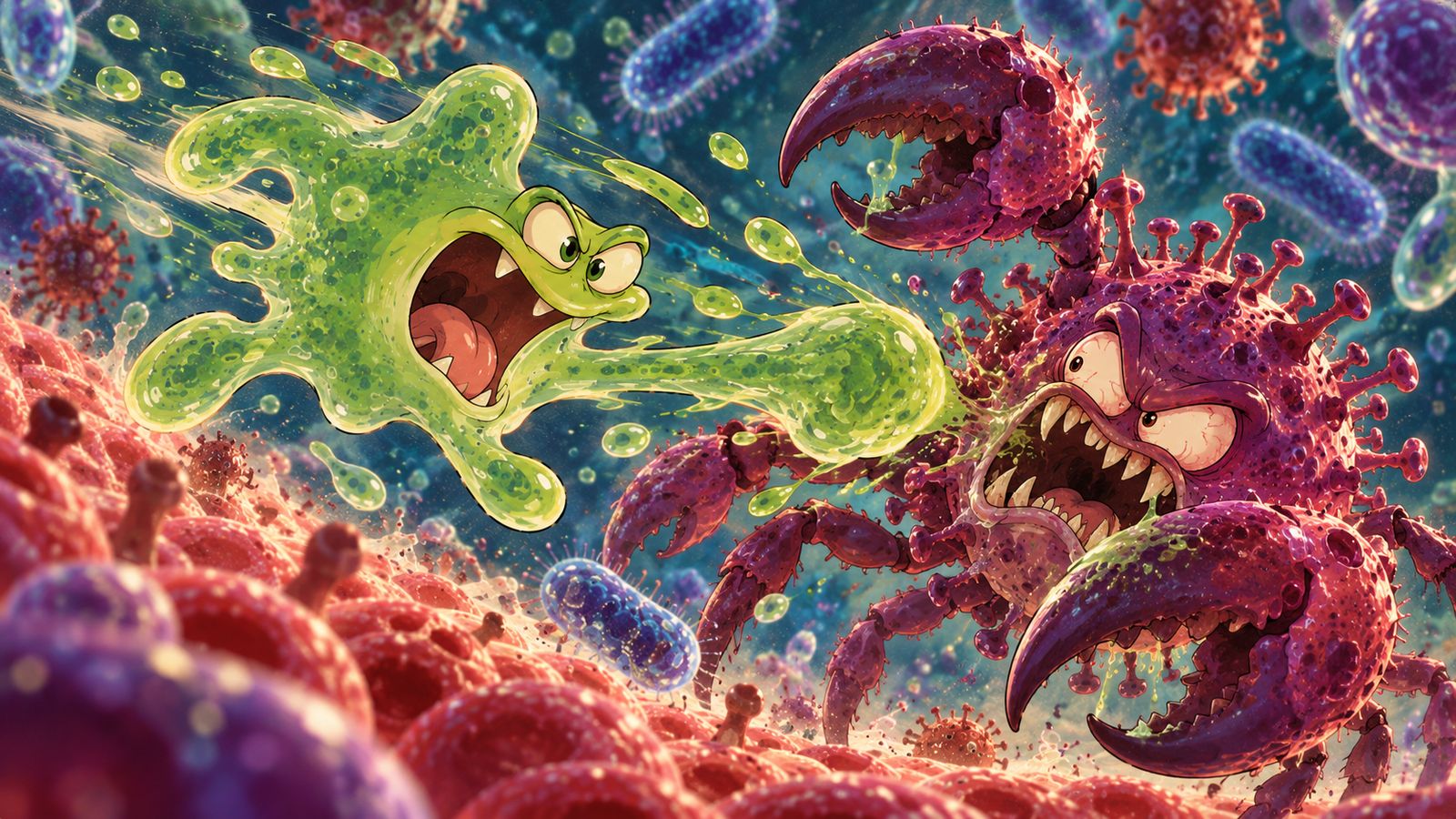
A large enemy is easy to notice. It’s much harder to make clear when you can bite it. If the hero only dodges and waits for a random opening, the boss’s imposing size doesn’t create an interesting challenge.
In the October version of the encounters, we worked with sequences of actions. Against one boss, you need to prepare an opening in its body; against another, direct its attack into a trap; against a third, survive a pattern of hazards and reach the right area. The bite completes the setup; it doesn’t replace the whole fight.
The player creates an opening
The Shell Gardener is connected to roots: you have to open its body, and in the second phase deal with two roots before the first one recovers. The Needle Hunter requires you to guide its needle into a trap growth and move away. Movement has a specific purpose here: make the threat work against its owner.
What matters to the player is how the actions connect. Why did an opening appear? What changed after a hit? When is the setup complete, and when should you bite? If the answers only appear in instructions before the fight, they’re easy to lose while moving.
Different ways to tap
In a separate boss viewer, we distinguished objects you tap directly, targets for a regular bite, and actions assigned to an extra button. Each method needs its own clear signal. Otherwise, a player can understand the challenge and still lose by trying to solve it with the wrong gesture.
Prompts beside the target, a gold ring around the opening, and phase explanations help connect the rule to a place on screen. But they can also get in one another’s way. The post about the Patriarch shows how we had to remove extra lines, rings, and warnings.
It helps to test the fight on its own
For development, there’s a viewer that lets us choose a boss and replay the encounter without completing the whole route. Repeating it with the same starting conditions helps us see what changed after an edit. Another option lets us check whether the solution depends on one convenient arrangement.
This is a development tool, not a promise of a separate public mode. An automated full fight also doesn’t prove a person will understand it on the first try. Automation checks rules and transitions; a live player checks whether the explanation works. A good boss brings both together: the mechanics allow victory, and the opportunity is clear enough for the player to create it themselves.