Guzzle returns from the hunt, but the game doesn’t have to return him to a completely untouched state. A temporary build belongs to a specific attempt; permanent development carries over between attempts. The next start depends on how clearly those two layers are separated.
In our early decisions, we separated experience and tree points from DNA. Organs unlocked gradually and were installed in set slots. In the next stage, permanent organ levels and a drawn nest appeared. Here, we’re telling the story of how that system developed without presenting old prices as an unchanging part of today’s balance.
An ability stays with the hero
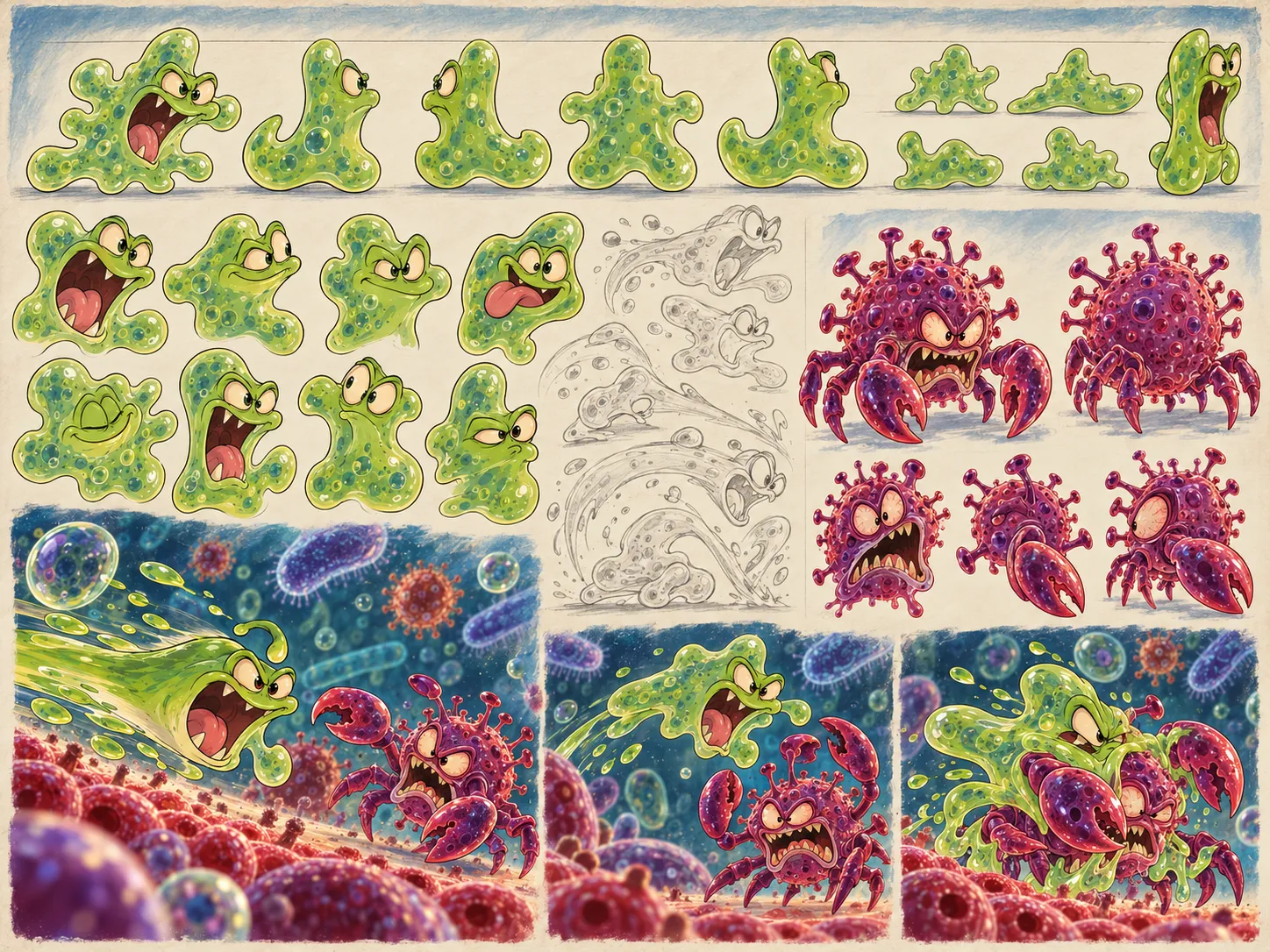
Slime helps Guzzle survive a hit, acid works on specific prey, and the third eye makes signals easier to see. These upgrades change how you interact with the world. They also have limits: slime won’t save you from hunger, and acid doesn’t turn every red enemy or boss into a meal you can eat from a distance.
Those limits need to be explained where players make their choices. If they only see a beautiful organ and a rising number, they may expect a different result. The card should say what they’re buying, how it works, and when they’ll still need to use the regular mouth.
The nest was redesigned too
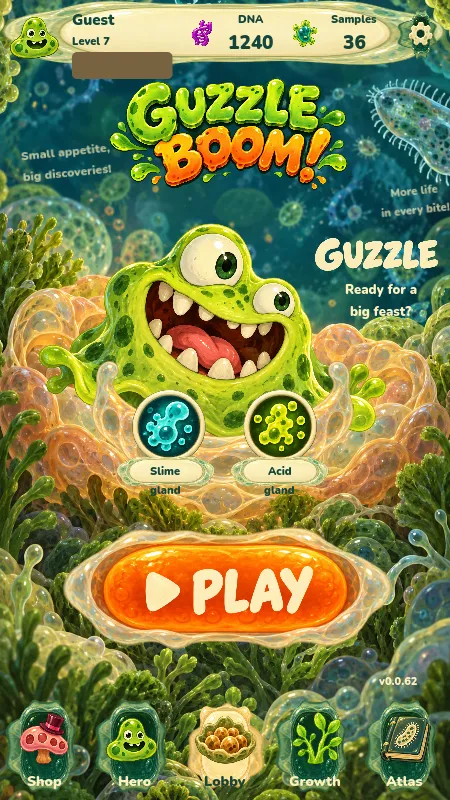
The first interface sample built with code was rejected. Then we chose an illustration of a living, organic nest and started assembling the interface from separate drawn elements: the surroundings, buttons, panels, an eye, and an atlas book. Code remained responsible for geometry, real values, and button presses.
Living Nest was redesigned further later on. It’s important to keep these stages distinct: the earlier chosen illustration explains the direction, while the later interface shows how it developed. The nest has to handle different screen sizes and real profile states, not just a demonstration with convenient numbers.
A purchase should only happen once
Behind the visible levels is a simple expectation: confirm and you get the purchase; cancel the preview and nothing is spent. A write error shouldn’t deduct DNA twice if it’s retried. That’s why we check the card’s presentation and the saved result together.
Permanent development gives players a reason to return after a defeat, but it doesn’t replace the hunt itself. Even with an organ installed, you still have to choose the right moment, recognize a threat, and reach food. The nest gathers the consequences of earlier attempts in one clear place, where you can send Guzzle back into trouble with a body that’s a little better prepared.