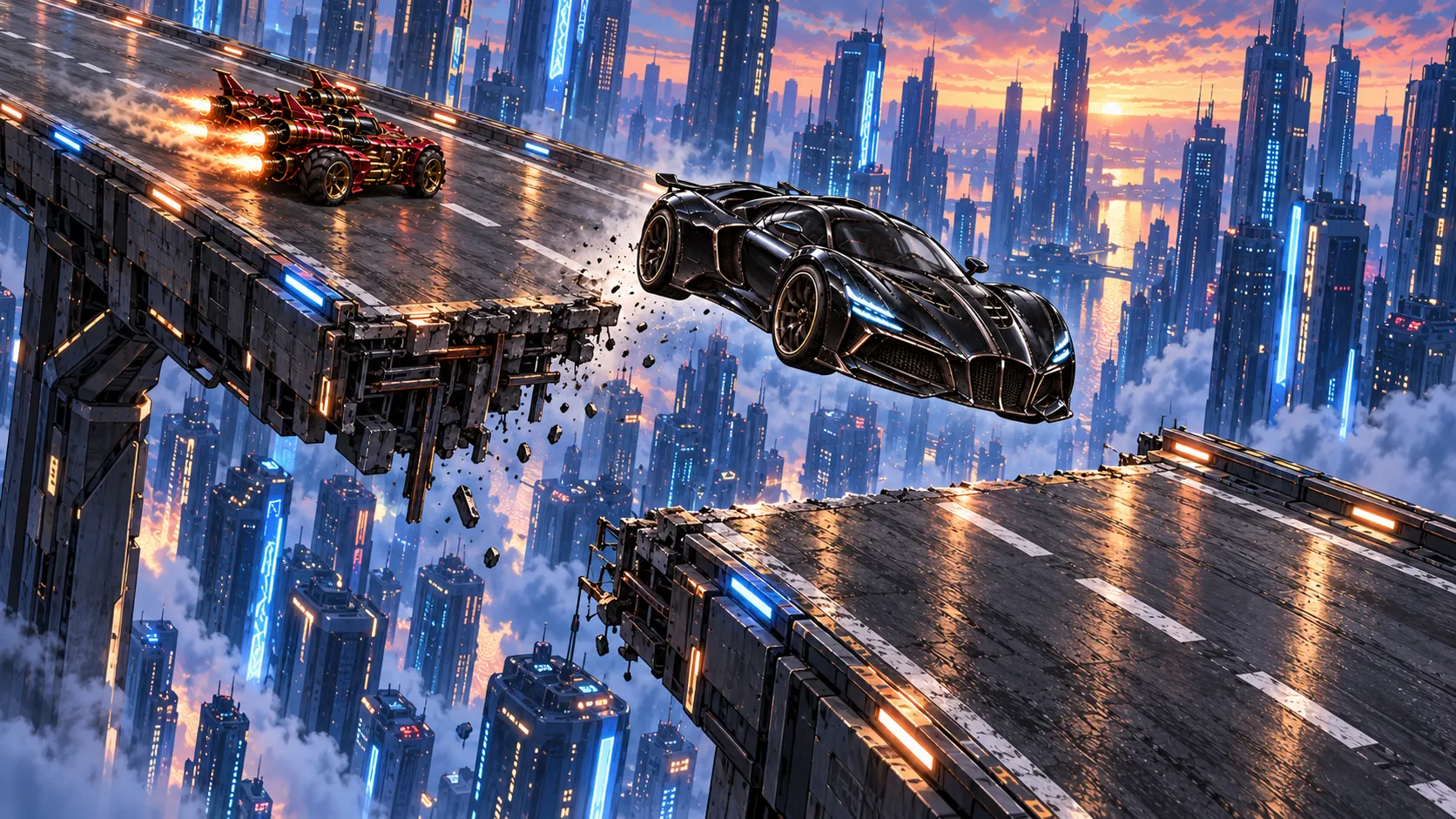
A failed series should mean something. But if absolutely everything disappears afterward, it’s hard to tell the risk of the current attempt from the game’s long-term progression. In Smoke and Flame, those layers are separate: temporary equipment belongs to the series, while permanent unlocks stay with your profile.
In the early championship, you spent credits earned from stages between races. The limited slots for temporary parts were cleared when you started a new series. Permanent funds and research were tracked separately. This describes the working foundation, not a fixed list of rewards for a future release.
Unlocking and installing
Researching a part gives you access to that option. To use its effect in the current race, you still have to select the part during preparation. This lets permanent progression expand your choices without turning every unlock into an automatic, invisible bonus.
After a defeat, a temporary build may disappear, while the option to build it again remains. That gives the player a reason to try a different combination without erasing the value of completed research. The garage needs to distinguish these states: unavailable, unlocked, and selected now.
A retry has its own rules
The early series had a limited retry. The selected weapon was locked for that retry. That makes it a continuation of a specific attempt, rather than a free chance to choose any new equipment after learning the track.
Those limits need to be explained before you press the button. If players only learn that their choice is locked at the start, the rule feels like a bug. A clear result matters after a win, too: the first reward shouldn’t be granted again simply because the profile was loaded.
Saving is part of a fair attempt
The game stores the series state and permanent unlocks separately. After an update, an existing profile shouldn’t lose an earned result just because development added a new part of the championship. Early transition documents separately describe continuing an existing series and switching to the new order with the next one.
For the player, it comes down to a simple expectation: the game remembers what actually happened. Development needs checks for rewards, recovery, and loading. We can’t promise that every defeat will feel good. We do want you to understand what you risked, what you lost, and what you’re taking back into the garage. Then a defeat ends one attempt without erasing the preparation for the next.