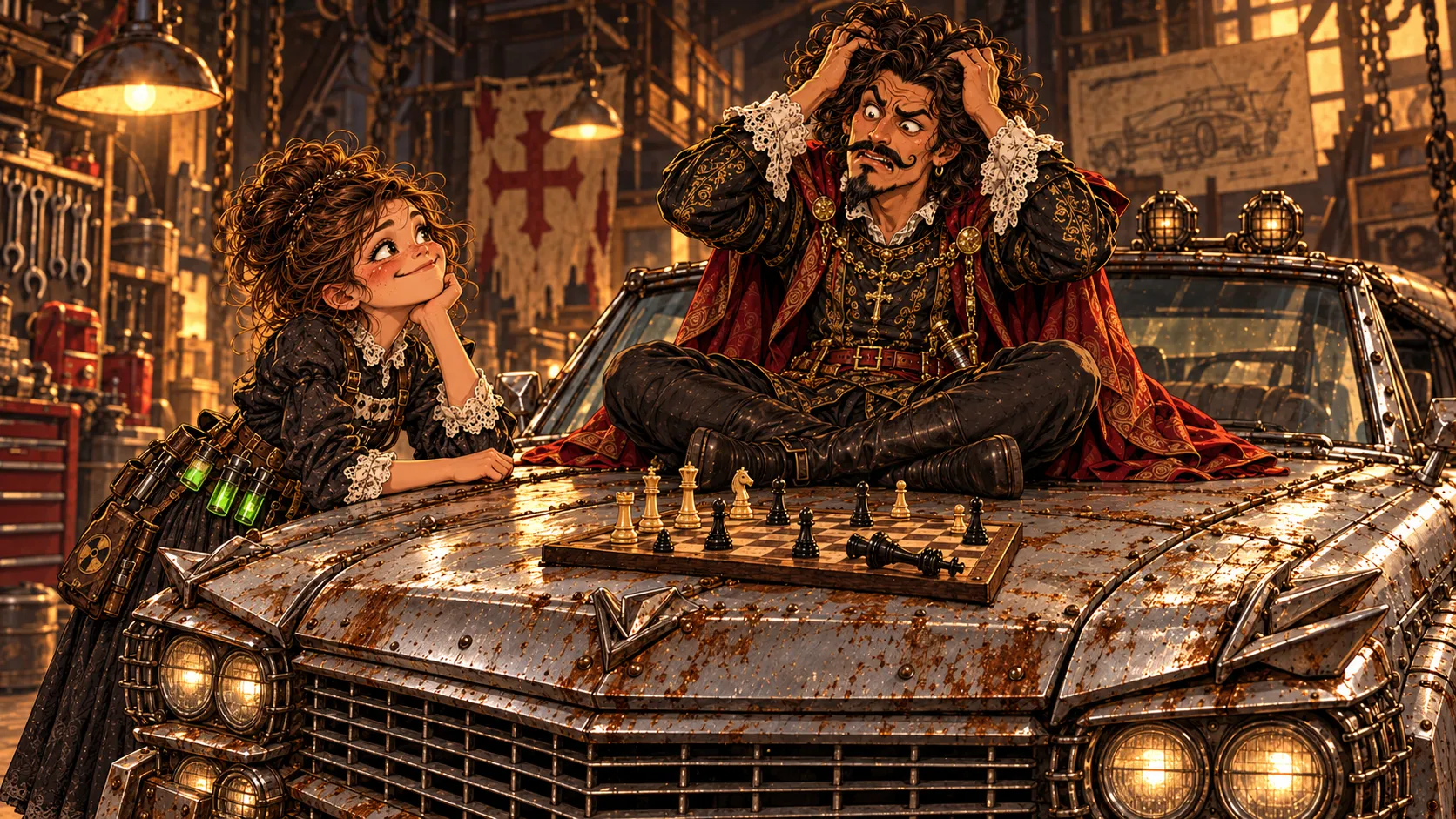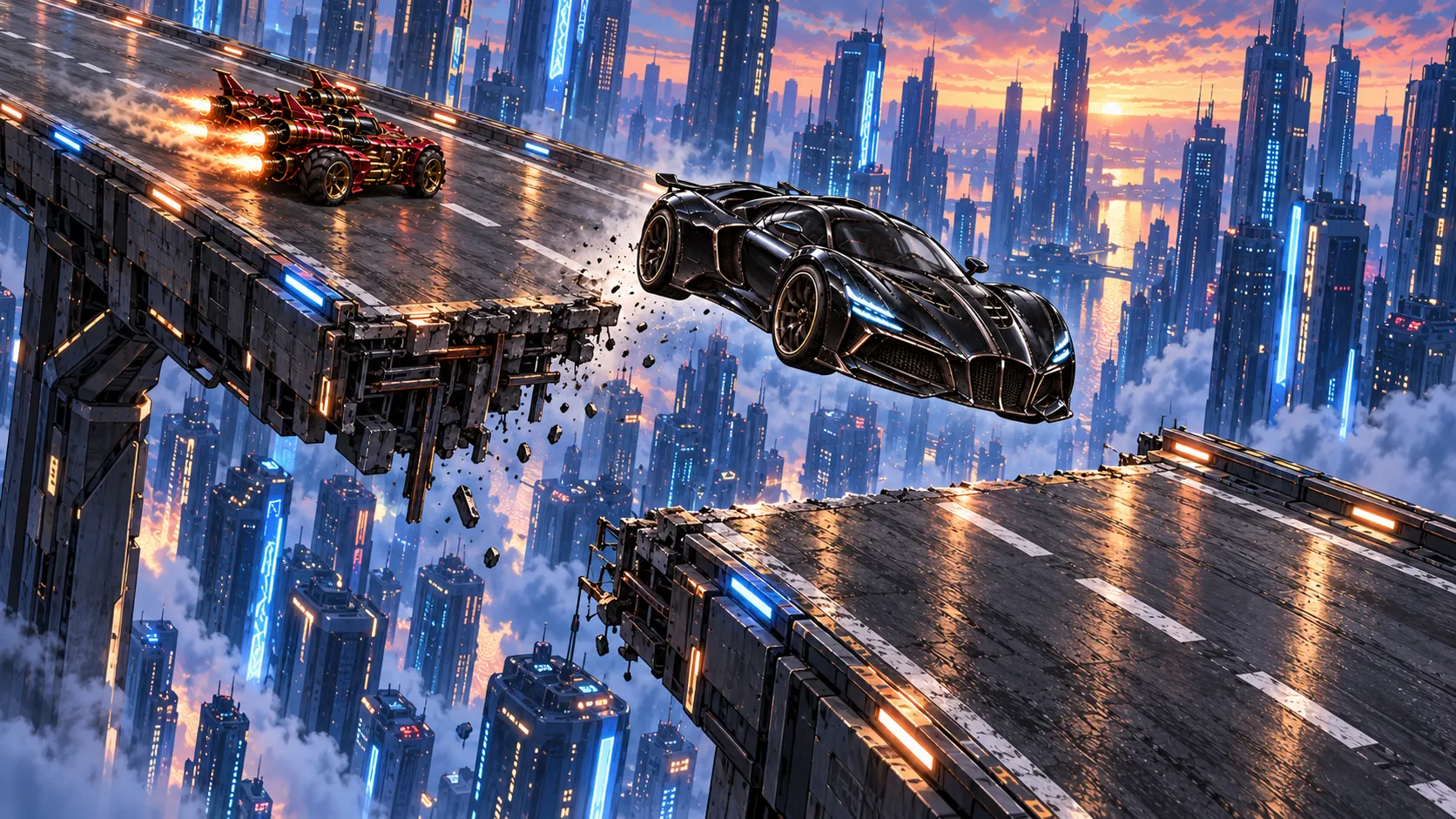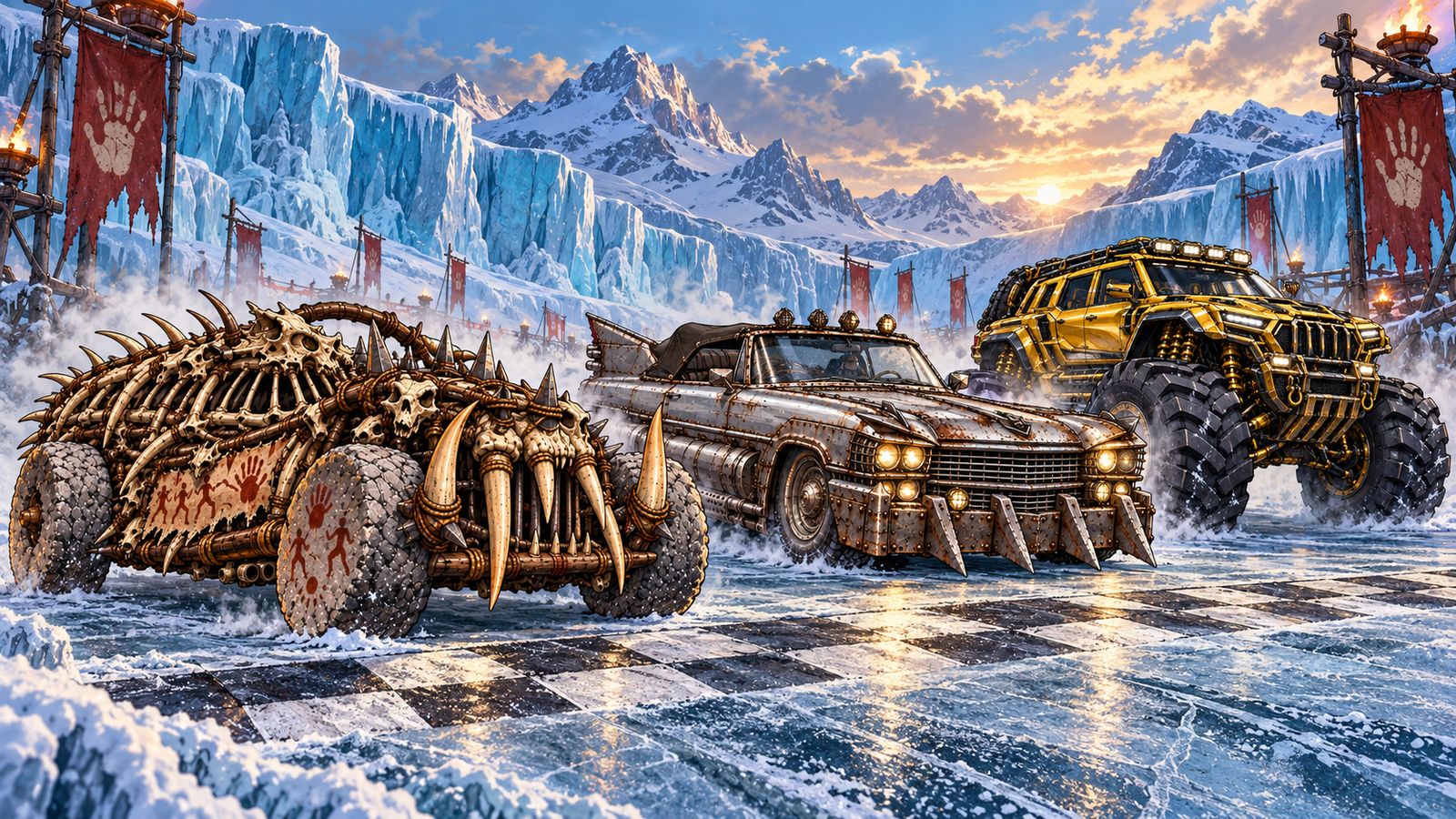
Weapons change which part of the track you watch. With the Pusher, you focus on the car ahead and the moment you close in. With a mine, you look back and think about the spot a pursuer is about to cross. Even on the same route, each weapon shifts your attention.
In the early Smoke and Flame build, each racer had one selected weapon. You chose it in the garage, and it was available in both races and practice. That limit helps you understand your setup: instead of cycling through every option at once, you build your approach around the one you brought.
Every action needs a source
A projectile comes from a specific point on the car; a mine drops behind it. When the body changes, those points need another check. Otherwise, a new weapon may fire from thin air or leave an object inside the model.
When the bone car was integrated, the team checked combinations of equipment, projectile origins, and mine placement. It’s a good example of how form connects to mechanics. Adding a model to the garage doesn’t finish the work: it has to fit with what the weapon does while the car is moving.
A shared reserve ties choices together
In the prototype, weapons and boost drew from a shared reserve. Temporary parts could change its behavior. One option, for example, sped up recovery while reducing capacity. That’s a tradeoff: faster recovery doesn’t simply mean more reserve in every situation.
These properties need to be explained before the start. Players should understand why a familiar sequence of actions behaves differently after installing a part. The working numbers may change during tuning; the tradeoff matters more than memorizing a percentage from an early version.
Height raises its own questions
Once the road has rises and jumps, flat-ground contact no longer describes everything. Cars can be at different heights. In the early 3D sample, those boundaries were called out explicitly: checking height in practice didn’t mean that every kind of combat interaction was ready for every situation.
That’s why we don’t call a weapon finished based on a dramatic frame alone. It needs to hit, consume the right amount, do nothing when it isn’t equipped, and produce a clear result. A good moment with a mine or a shove stays with you because of what happens on the road. The effect lasts a second; the decision about where and when to use it starts much earlier.