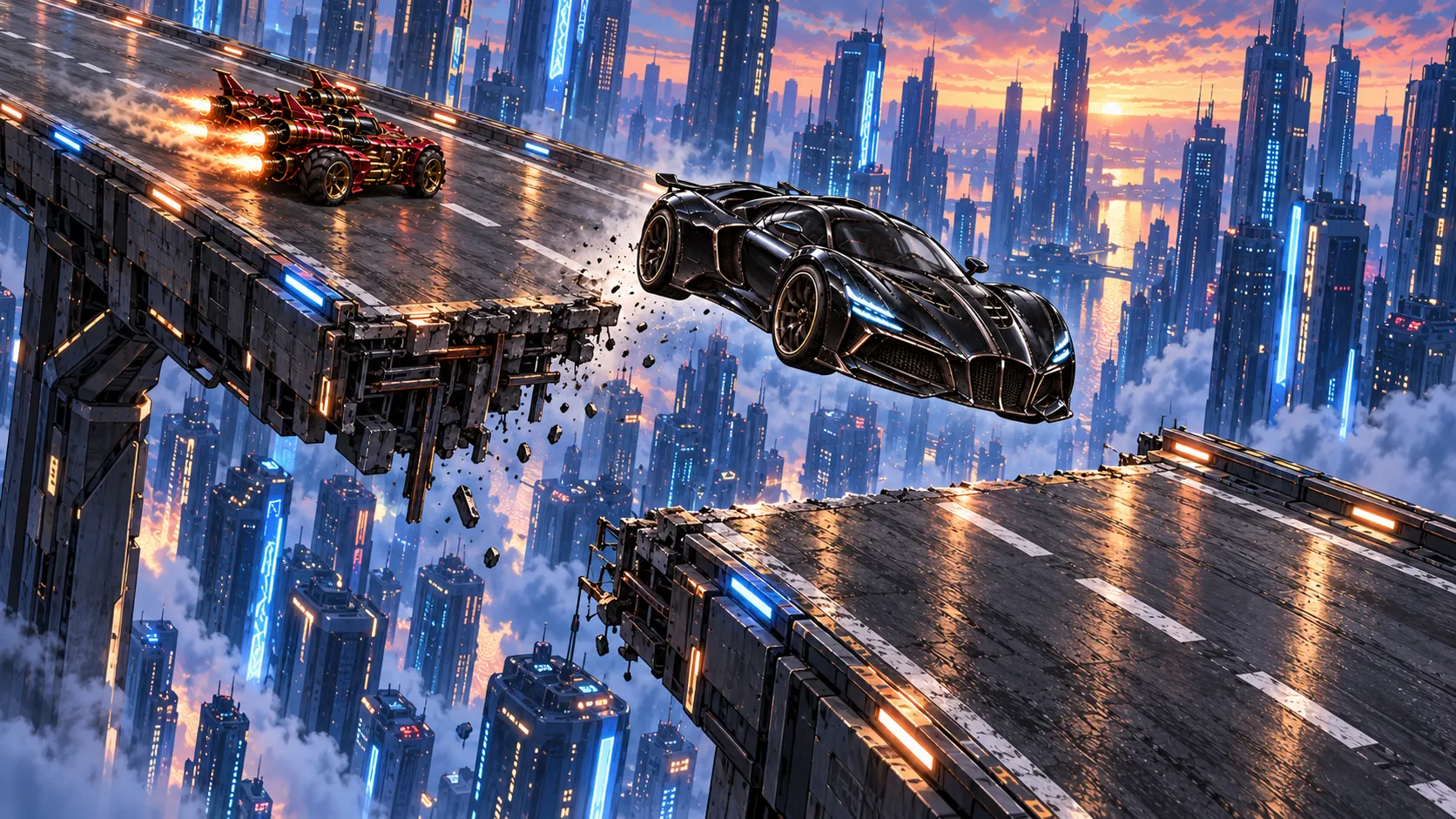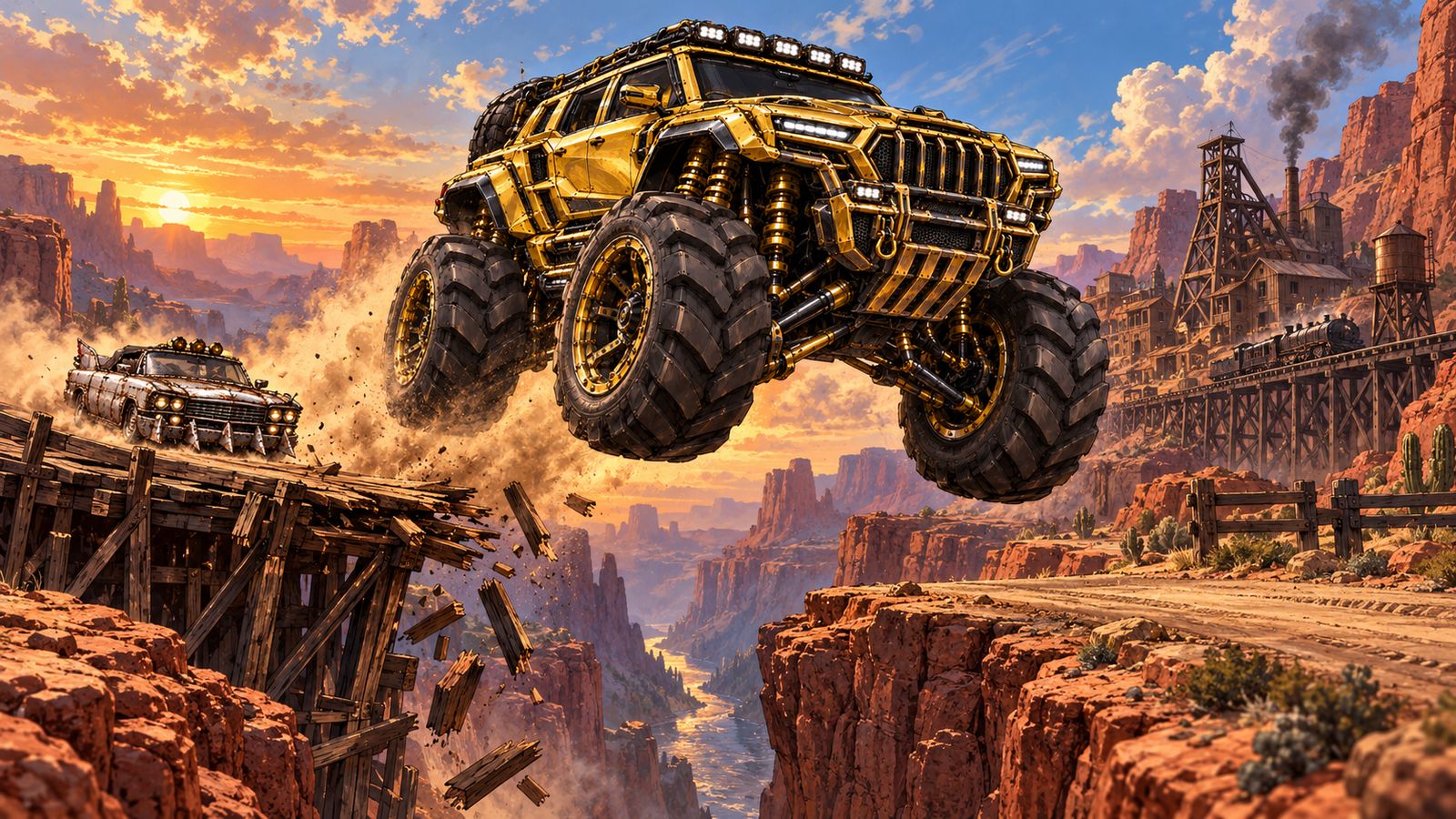
On a straight, two cars can feel almost equally convincing. A turn asks more: when should you brake? How does the body respond to steering? How much room is left before the edge, and what happens after contact with a rival? In Smoke and Flame, a car’s character should come through in those actions.
The early build already had different physical dimensions, braking, and grip. Later, the addition of three-dimensional bodies brought new demands for how the visuals matched the movement. It’s important to keep a model’s expressive lean separate from the rules that make the car drive.
The image and the movement have to meet
If a body turns beautifully but collisions happen far away from it, the player gets conflicting signals. If a wheel doesn’t rotate around its own axis, even a small error becomes obvious in the garage and at low speed.
That’s why we check dimensions, axes, and attachment points alongside the car’s behavior. The model needs to sit correctly in relation to the road. After changing its proportions, we need another look at how its visible width lines up with the physical chassis. This is about more than appearance.
One track makes comparison easier
Free practice separates movement checks from rewards and championship progress. On a familiar layout, it’s easier to notice differences in braking, grip, and contact. A practice run also shouldn’t change progress in the main series.
Development uses repeatable runs, too. They help us compare versions under the same conditions. But a successful automated lap doesn’t mean a person will immediately understand the car. It confirms that a set scenario can be completed; how the turn feels still needs a human eye.
The game should explain what happened after a hit
Being wrecked and going off the road are different events. Recovery, pausing, and resuming should make clear which one occurred. If the car disappears and reappears without an understandable reason, it’s hard to know what mistake to avoid next time.
We work on this through specific situations, not by promising “perfect physics.” The car should let you learn: brake earlier, take a different line into the curve, or leave room for a rival. When cause and response are clear together, the body gains character in motion. Even without a name in the garage, you should be able to tell what you’re driving and what not to expect from it in the next turn.