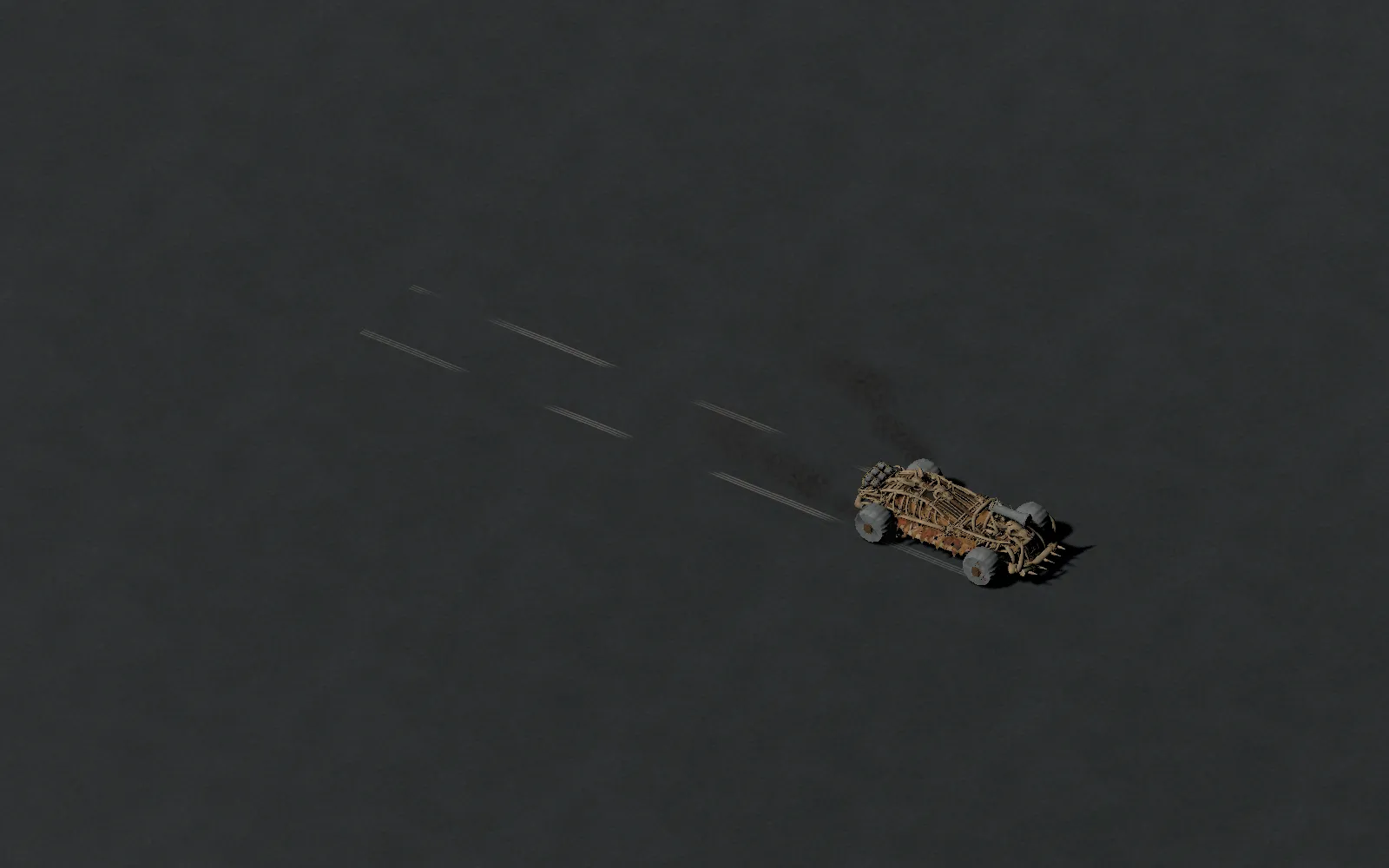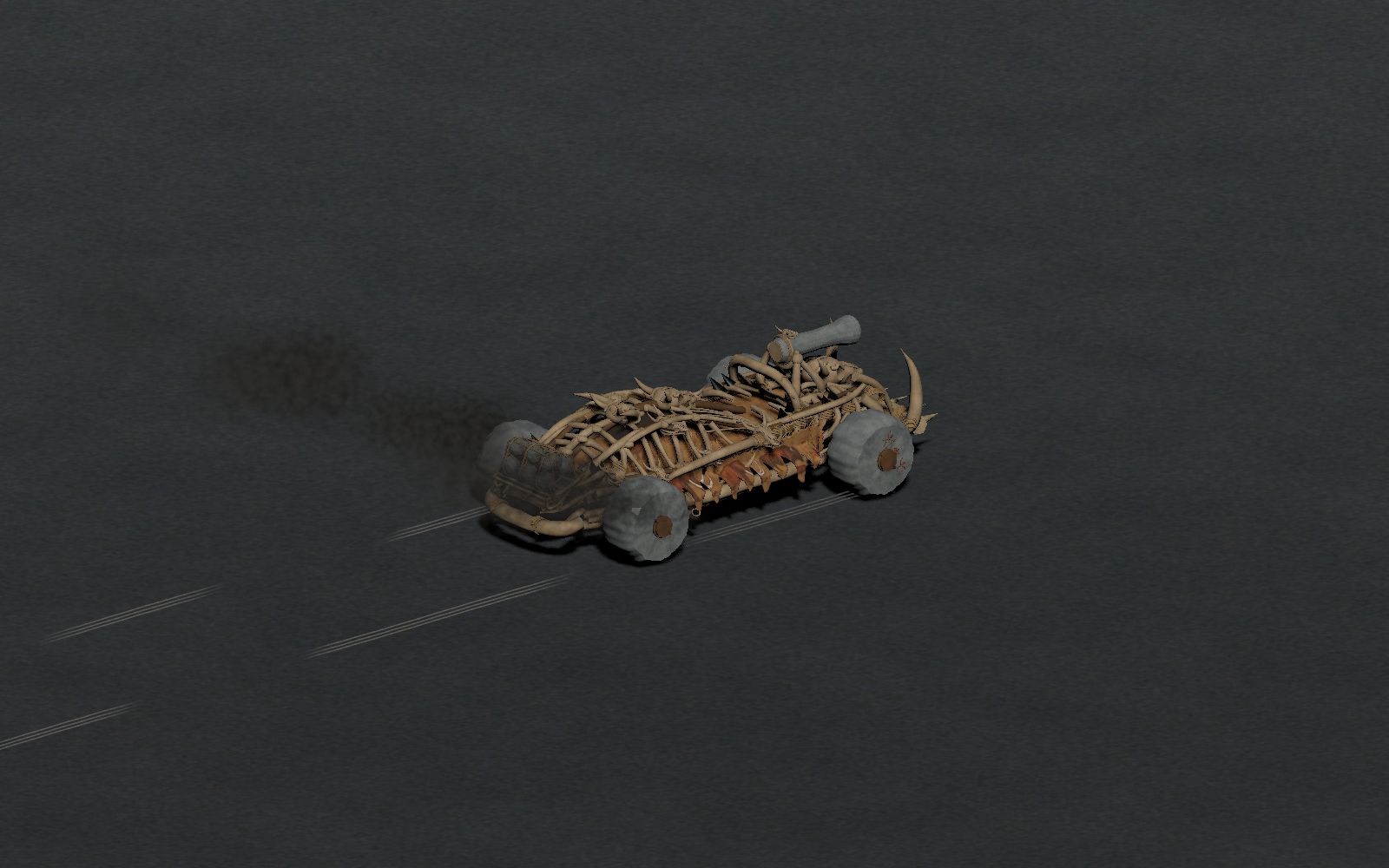
Bone is easy to make white. It’s much harder to make it look old and heavy, and convincing beside stone, hide, and wood. In one iteration of the bone car, the overall finish was well received, but the bones looked too white and plastic. That feedback shaped the next pass on the surfaces.
One clarification up front: Lucy is a character. The car has no name yet; we call it the bone car. An older technical document uses a previous label, but in the story of this world, it’s important not to confuse the heroine with the vehicle.
Change the surface, keep the construction
The shape wasn’t rebuilt in that pass. The bones became warmer and darker, and their surface more matte and varied. Fine pores and restrained mineral marks were added. Darker areas at contact points help the parts look assembled and as though they’ve been together for a while.
The pores didn’t become heavy new geometry. They were handled through surface maps. That changed how the material responds to light while preserving the accepted construction and placement of its parts.
The paint needs to stay in place
The car has a painted design that needs to keep its placement on the surface. During export and integration, the team has to make sure that processing the new model doesn’t rebuild those coordinates and shift the paint. Otherwise, a technically valid file would look like a different piece of work.
Recoloring is checked separately, too. Multiple instances of the car can have different colors while sharing textures. Changing one instance shouldn’t recolor another. It’s a simple check in the test scene, and a necessary condition for a clear garage on the track.
Lighting shouldn’t hide a mistake
The material was viewed in different modes and with two render setups. Under one flattering light, almost any surface can look good. In the game, it has to hold up close, at a distance, and in another setting.
After the surface work, the team continued with proportions and effects. The stone wheels got matching scratches on the road, and the exhaust changed to black smoke instead of a flame jet. That connects the material to behavior: stone differs from rubber in more than color. Small alignments like these make the fantastical construction more convincing. It doesn’t have to be a real car, but its parts should at least agree on what they’re made of.